The jawline people miss
Patients describe this to me in strikingly similar ways. No one comes to me asking about Endolift or filler, but they complain about one of the following:
"I saw a photo of myself from the side, and there was no definition to my lower face anymore."
"I eat well, I'm healthy, my body fat is low, but I still have jowls and a bit of a double chin no matter how much I exercise."
"I used to have such a strong, tight jawline, and I miss it."
And very often: "I had filler in my jawline. It looked good for a while, but now I feel like it's changing the shape of my face, making it heavier." Women in particular tell me the definition came back but their lower face started to look more masculine or fuller than they wanted.
These are not vanity complaints. They describe something real that is happening beneath the skin, and it is not something exercise or diet can fix, because the causes are structural rather than about body weight. Understanding those causes is the whole key to treating the jawline well, so that is where this article starts.
Why does the jawline lose definition?
Jawline ageing is not one problem with one cause. It is a combination of several changes happening at different depths, usually at the same time. In my assessment I think about five.
1. Skin laxity
Over time the skin becomes looser. The dermis thins, and it loses two proteins that give skin its firmness and its ability to snap back: collagen and elastin. That loss is driven by the things we are all exposed to over a lifetime, such as sun exposure, sugar in the diet, stress, cigarette smoke and the general burden of reactive oxygen species. As the protein scaffolding of the dermis weakens, the skin hangs lower and no longer recoils the way it did.
2. Fixed ligaments and the pre-jowl sulcus
The skin is not loose everywhere. Certain points are anchored to the bone by retaining ligaments. The mandibular cutaneous ligament, for example, tethers the skin just in front of the jowl firmly to the jaw.
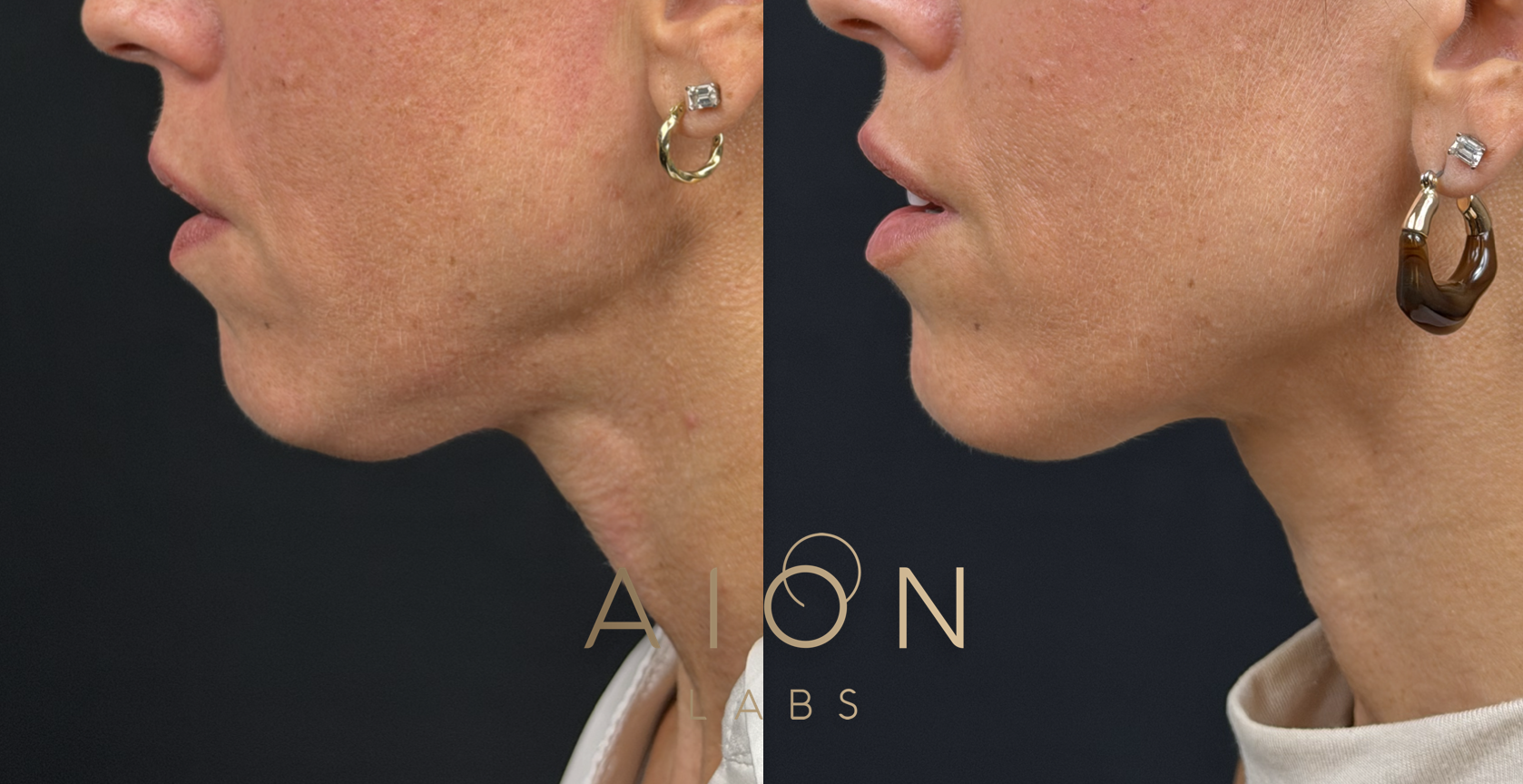
This is why the jowl forms where it does. The loose skin above and behind that fixed anchor point collapses downwards and forwards, while the anchored point stays put. The result is a jowl sitting behind a small dip in front of it, the pre-jowl sulcus. The contour you dislike is partly the shadow created by a fixed ligament holding one point while everything around it descends.
3. Redistribution of fat
Fat changes in two ways that both affect the jaw.
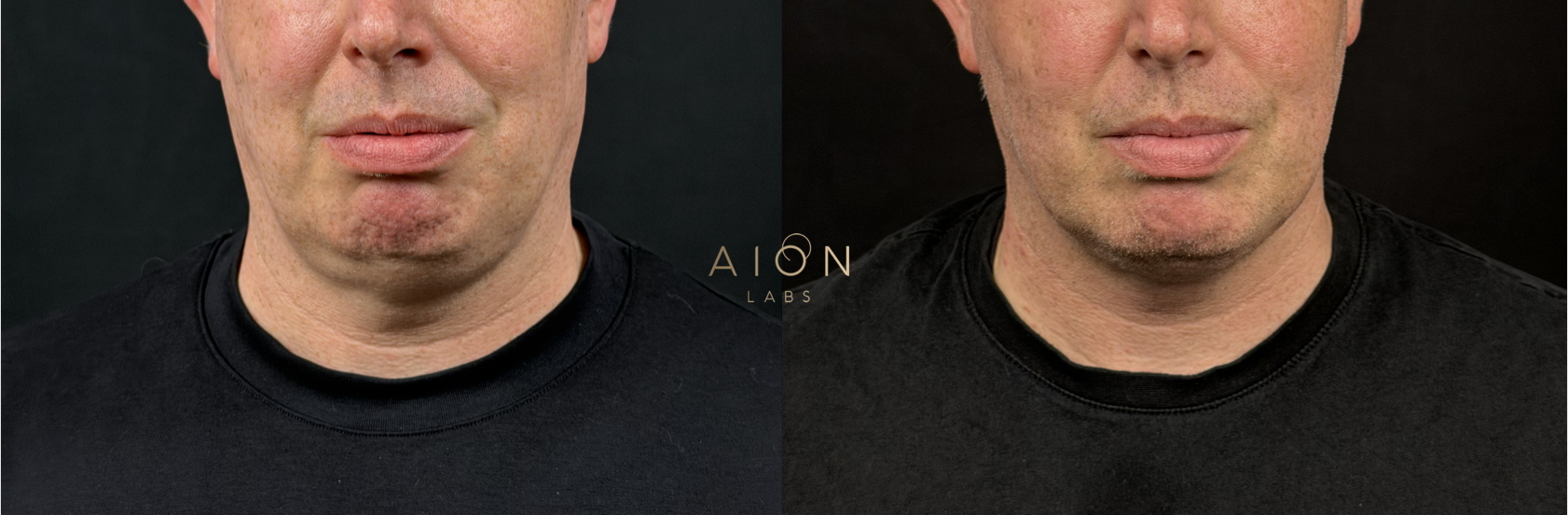
First, fat can increase and pool in specific places, most visibly under the chin (the submental area) and along the underside of the jaw. This is what erases the clean line between the jaw and the neck, and it is why someone lean can still have a full under-chin.
Second, and more subtly, fat descends within the facial fat pads. Fat that once sat higher in the face redistributes lower down. In the jowl, that means more fat collecting at the bottom of the jawline, making it heavier and fuller, and dragging the contour down over the sharp border of the jaw so the definition you once had is lost.
4. Loss of deep support and muscle tone
Beneath the skin and fat sits a layer of deep fat, between the facial skeleton and the SMAS, that acts as structural support. As this is lost, the overlying tissues have less to rest on, which reads as sagging. At the same time the muscles that help hold the face up lose some of their tone. Both reduce the support underneath the jawline.
5. Loss of bone volume
Finally, the jawbone itself loses a little volume over time, which reduces the underlying framework the whole lower face is built on. This tends to happen later than the first jowls appear, so it is often not the main driver in someone noticing the change for the first time, but it compounds everything above it.
The reason this five-part picture matters is simple: a treatment aimed at only one of these will disappoint if another is the real problem. This is also why filler alone often falls short. Adding volume can restore a line for a while, but if the underlying issue is laxity and descended fat, adding more weight to a heavy lower face can make it look fuller and, in women, less feminine, which is exactly the complaint I hear.
"Filler adds volume to a face that has lost support. Endolift restores the support itself, which is why it so often suits the jawline better."
— Dr Rob Humphries, Clinical Director
How Endolift treats the jawline
Endolift is a minimally invasive laser treatment. Very fine fibres are placed just beneath the skin along the jawline and under the chin, delivering laser energy into the deeper layers to do two things: tighten the skin by stimulating collagen, and reduce small pockets of fat where that is what is needed.
That combination is what makes it well suited to the jaw specifically, because the jawline problem is usually both laxity and fat at once. In someone whose main issue is a soft, full under-chin, the emphasis can be placed on reducing that submental fat. In someone whose main issue is loose skin and an early jowl, the emphasis shifts to tightening. The same device, adjusted in depth and technique, does a different job depending on which of the five factors is dominant in the face in front of me.
It is worth being clear about where the fibre is working. The jawline is exactly where the marginal mandibular nerve runs, the nerve that controls the corners of the mouth. Working safely and effectively in this area depends entirely on knowing precisely where that nerve and the other structures sit, and keeping the fibre at the correct depth. This is not an area to treat by feel. It is the part of my own background, teaching facial anatomy and working in and around the jaws, that matters most here.
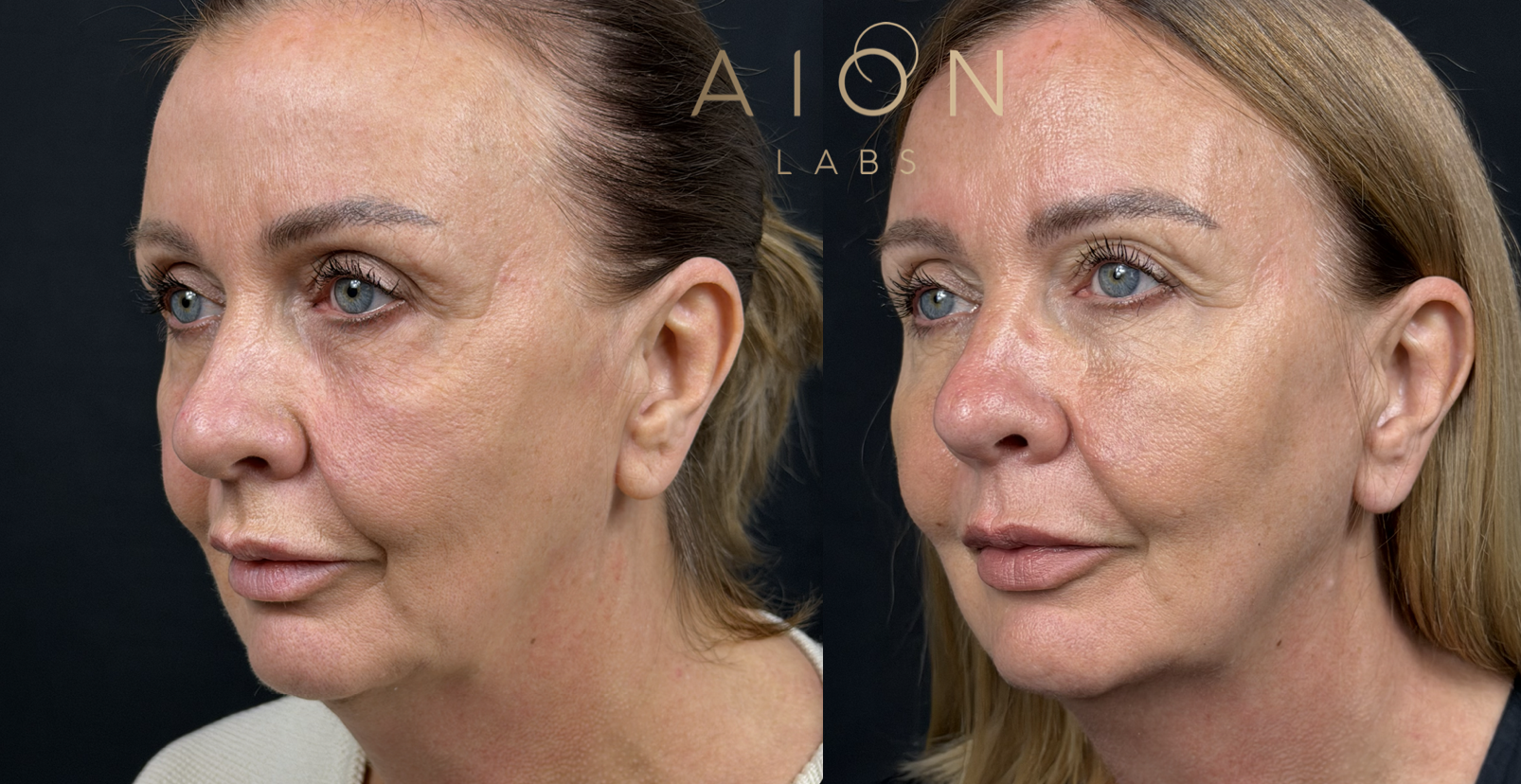
Jawline treatment for men and women
The anatomy is the same in both, but the goal often is not, and a good result depends on treating for the outcome the patient actually wants.
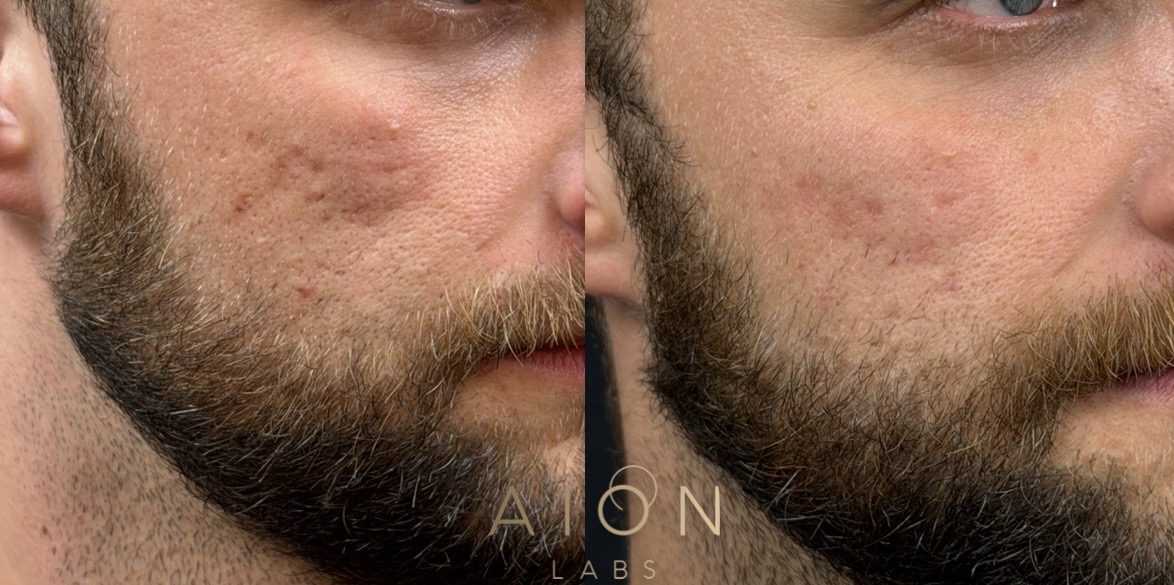
Men tend to want the jaw sharper, squarer and more defined, and the under-chin cleaned up. The submental fullness, the "double chin", is frequently what brings a man in, and Endolift's ability to reduce that fat while tightening suits that aim well. Men also tend to want no visible sign that anything has been done, and minimal time away from work, which fits a treatment with short downtime.
Women more often want a smoother, lifted contour and a cleaner jawline without adding heaviness or squareness. This is the group most likely to have tried filler and found it made the lower face look fuller or more masculine than they wanted. Because Endolift tightens and refines rather than adds volume, it works with a different goal in mind: restoring the line by lifting and reducing, not by building it out.
In both cases the treatment is planned around what the person wants their jaw to look like, not applied identically to everyone.
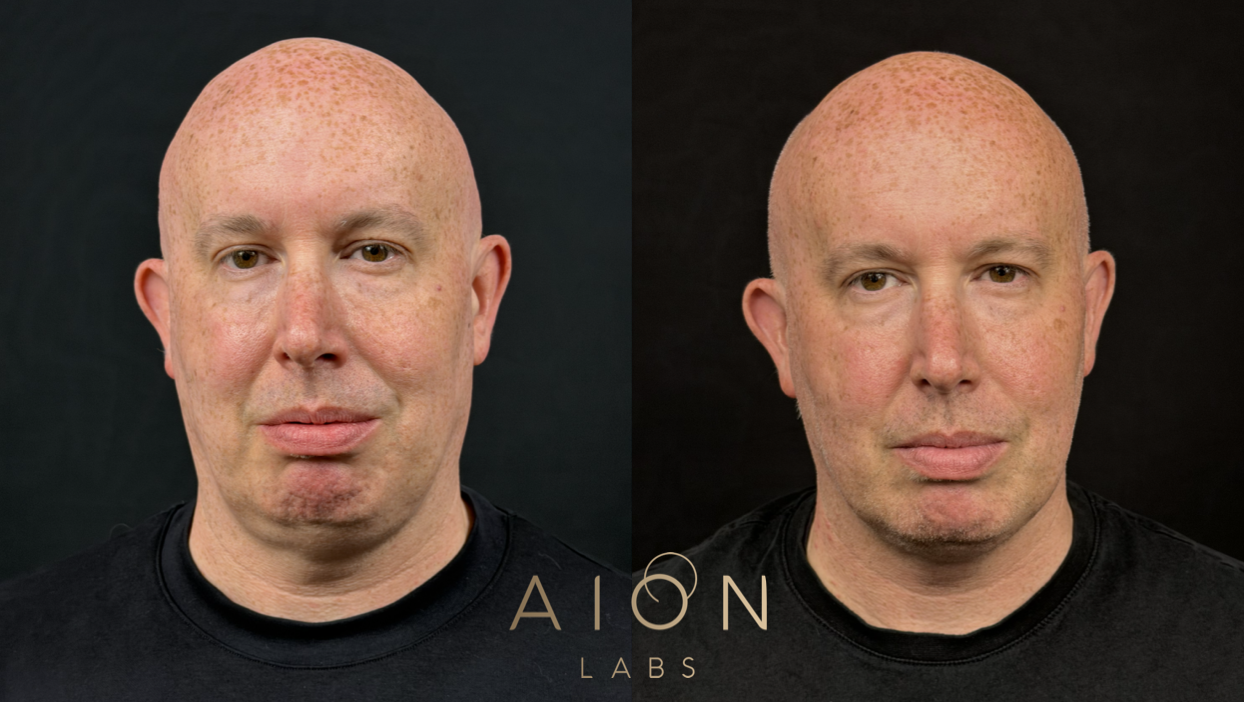
Who is Endolift right for, and who is it not?
Endolift suits mild to moderate skin laxity, early to moderate jowls, and small to moderate pockets of fat under the chin and jaw. It is a strong option for someone who wants a real change without surgery and without the heaviness that volumising approaches can bring.
It is not a substitute for surgery where there is a large amount of excess skin, and it will not defy a very significant weight of soft tissue. Part of an honest consultation is telling you when the answer is that a different treatment, or a surgical one, would serve you better. If the assessment shows that, I will say so.
What to expect
Endolift stimulates collagen, and collagen remodelling takes time. The tightening develops over the months following treatment rather than appearing on the day, so the jawline you see at three to four months is a better guide than the one in the mirror the following week. Most people have some bruising for several days to a couple of weeks, mild swelling for a day or two, and a temporary tingling sensation as the superficial nerves settle. Downtime is short, which is part of the appeal.
Frequently asked questions
Can Endolift define my jawline without surgery?
Yes. Endolift tightens the skin and reduces small fat pockets along the jaw and under the chin through fine laser fibres placed beneath the skin, restoring definition without incisions or a general anaesthetic. Results develop over several months as collagen rebuilds.
Does Endolift help with jowls and a double chin?
It can. Endolift addresses two of the main causes of jowls and under-chin fullness, skin laxity and localised fat, at the same time. Suitability depends on the degree of laxity and fat, which is assessed at consultation.
Is Endolift better than filler for the jawline?
They do different things. Filler adds volume, which can help a defined line but may make a heavy lower face look fuller. Endolift tightens and reduces, which often suits jawline ageing better, particularly where the problem is laxity and descended fat.
Is Endolift for the jawline suitable for men?
Yes. Men often seek a sharper, squarer jaw and reduction of under-chin fullness, both of which Endolift can address, with minimal downtime and no obvious signs of treatment.
How long do Endolift jawline results last?
Because Endolift stimulates the skin's own collagen, results build over months and are long lasting, though the natural ageing process continues over time. Individual longevity is discussed at consultation.
Book a consultation
A defined jawline result depends on treating the right cause, which is why assessment matters more than the treatment name. Consultations are available at Aion Labs in London.